Your clinic closes for the holiday. Attackers don’t.
 By David Freeland3 min read ·
Another kind of Black Friday
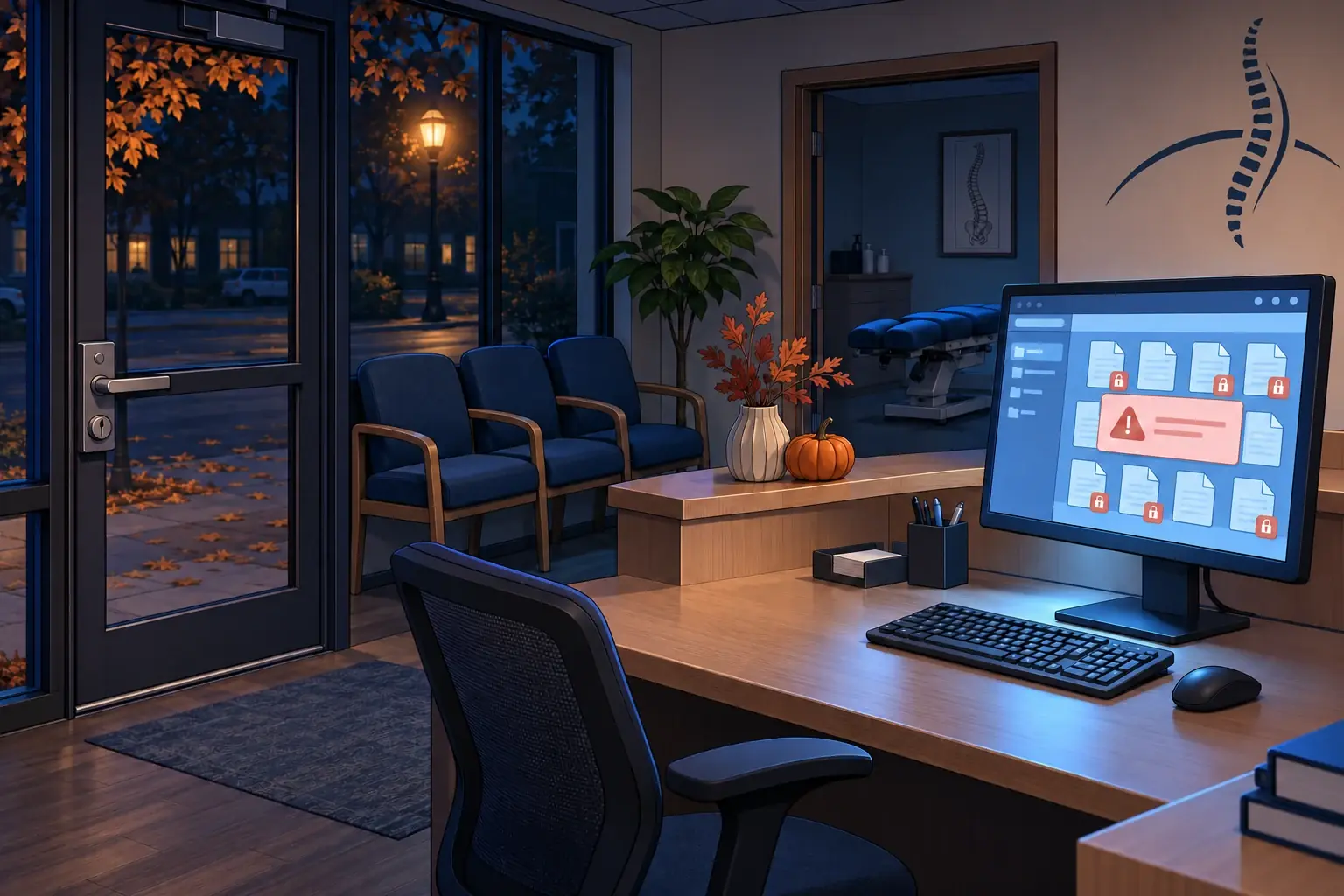
Wednesday, 2:00 PM. The last patient leaves. Your team turns off the lights, locks up, and heads home for Thanksgiving. The clinic won’t open again until Monday.
Black Friday, 1:47 AM. Someone signs in to the clinic’s network with a stolen password. Nobody is there to see it. Over the next two days, they look around and quietly copy files.
Sunday, 11:30 PM. The files start locking, one computer after another.
Monday, 7:10 AM. Your chiropractic assistant sits down to sign in and get ready for the first patient. Every file has been renamed. A note on the screen asks for payment.
The attack started on Friday. The clinic found out on Monday. Everything in between happened with nobody watching.
Why attackers like a holiday weekend
Attackers don’t pick their dates at random. In its 2026 report on the attacks its teams responded to, security company Sophos says attackers often steal data and lock files “during major holidays, nights, and weekends.” It also saw a small bump on Thursdays and Fridays, as people head out for vacation or leave work early. A 2025 survey by another security company, Semperis, found that over half of the organizations hit by ransomware were hit on a weekend or holiday.
The reason is time. A clinic that closes Wednesday afternoon and opens Monday morning sits empty for more than four days. In the story above, the attacker had more than three days before anyone looked. Every hour nobody is watching is an hour an attacker can use.
Think about leaving town for a long trip. You lock the doors, of course. You also ask a neighbor to keep an eye on the house and call you if something looks wrong. The lock slows a burglar down. The neighbor is the one who notices the broken window on day one instead of day five.
What HIPAA says when nobody noticed
Ransomware isn’t only a computer problem. HHS’s ransomware guidance says that when ransomware encrypts patient information, a breach is presumed to have happened, unless the clinic’s risk assessment shows otherwise.
Timing matters too. HIPAA treats a breach as discovered on the first day it’s known, or the first day it “would have been known” with reasonable diligence (45 CFR § 164.404(a)(2)). Notice to patients has to go out without unreasonable delay, and no later than 60 days after discovery. So the clock can start from when the breach should have been found, not only from when someone happened to notice.
Before you lock up for the holiday
- Know who’s keeping watch: Ask your IT company whether trained people watch your computers over nights, weekends, and holidays, and what they’ll do if something looks wrong. Ask who they’ll call at your clinic, and make sure that person knows it.
- Check the backup before you leave: Ask your IT company to confirm the last backup finished and that a copy is kept offline, away from your network. CISA recommends offline, encrypted backups that are tested on a regular basis.
- Leave a way to reach you: Make sure your IT company has a current cell number for the owner and the office manager, and agree on how they’ll reach you over the holiday. CISA’s ransomware guide suggests phone calls during an attack, so the attackers don’t see the conversation.
Lock the doors, make sure someone is keeping watch, and then go enjoy the holiday.
General information, not legal advice.
Last reviewed November 27, 2026.
References & statutory citations
- Sophos: Stopping real-world attacks: Lessons for business leaders from the 2026 cyber frontline (based on the Sophos Active Adversary Report 2026; Sophos’s own research; no date shown). (opens in a new tab)
- Semperis: 2025 Ransomware Holiday Risk Report (Semperis’s own survey; no date shown). (opens in a new tab)
- U.S. Department of Health and Human Services: Fact Sheet: Ransomware and HIPAA (July 11, 2016). (opens in a new tab)
- Code of Federal Regulations: 45 CFR § 164.404(a)(2) and (b), Notification to individuals (10–1–25 Edition). (opens in a new tab)
- Cybersecurity and Infrastructure Security Agency (CISA): #StopRansomware Guide (September 2023). (opens in a new tab)