Can you put patient information into ChatGPT?
 By David Freeland4 min read ·
A time-saver you hear about at a seminar
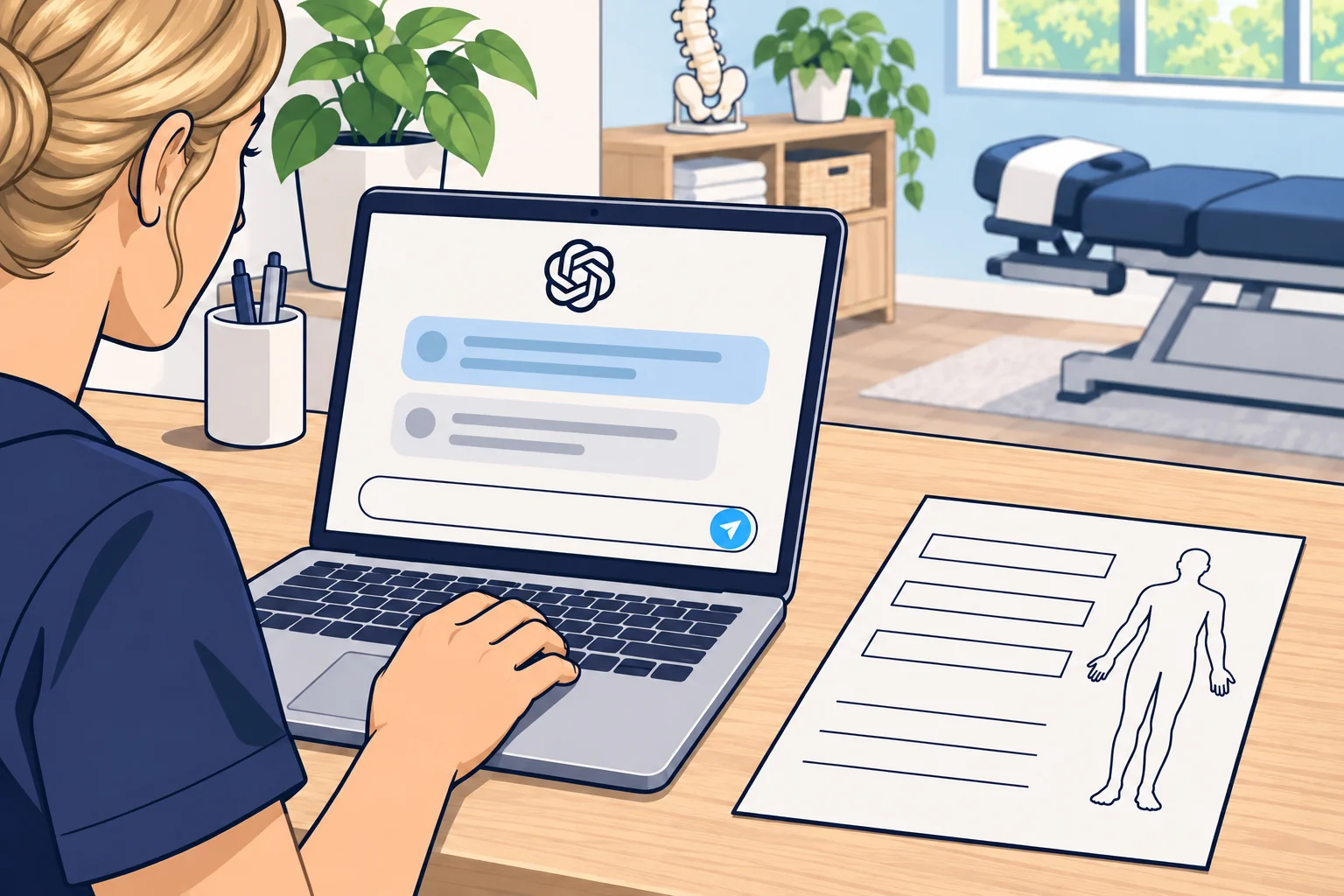
It’s a weekend seminar. Between sessions, a doctor you know shares his favorite shortcut. When an insurance company denies a claim as not medically necessary, his front desk pastes the denial letter and the visit notes into ChatGPT. It drafts an appeal letter that walks through the exam findings and the treatment plan. He says it saves his team hours.
It’s a smart use of time. But look at what went into that chat box: a patient’s name, the dates of service, the diagnosis, and the notes from the visit. All of it now sits with an AI company, under rules his clinic didn’t set.
On the drive home, you start to wonder whether anyone on your team does the same thing.
Where your words go after you press enter
AI chat tools like ChatGPT and Claude write letters, notes, and answers from whatever you type in. What you type doesn’t stay on your computer. It goes to the company’s servers in the cloud.
Picture an outside billing company that uses your patients’ files to train its staff for other clinics. No clinic would sign up for it. On many AI plans, the deal is close to that.
That’s how personal plans work, free or paid. On ChatGPT’s plans for individuals, OpenAI says it may use what you type to train its models unless you opt out. On Claude’s Free, Pro, and Max plans, Anthropic asks each person to choose whether their chats can be used to improve Claude. On a staff member’s own account, that choice is theirs, not your clinic’s.
Business plans have rules of their own. OpenAI says it doesn’t use content from its business plans to train its models. Its agreement for business customers, which covers ChatGPT Business, says they can’t use its services with patient information unless they’ve signed its healthcare addendum. OpenAI doesn’t offer that agreement for ChatGPT Business.
The exceptions are a few enterprise and healthcare versions that include a business associate agreement (BAA), the contract HIPAA requires before an outside company handles your patients’ information.
OpenAI offers one for ChatGPT Enterprise and ChatGPT for Healthcare. Its free ChatGPT for Clinicians lets an eligible clinician sign one, but as of November 2026, chiropractors aren’t on its list. Anthropic offers one for Claude Enterprise once the account’s owner turns on its HIPAA setting.
AI built into software you already use may be covered, too. If you use ChiroTouch, its AI scribe, Rheo, is covered under your existing BAA with ChiroTouch. ChiroTouch says Rheo’s notes stay inside ChiroTouch and aren’t used to train outside AI models.
What HIPAA says when patient information leaves the clinic
The rules that apply to any outside company apply to AI tools:
- 45 CFR § 164.402 defines a breach. Sharing patient information in a way the Privacy Rule doesn’t allow is “presumed to be a breach” if a risk assessment can’t show the information likely stayed safe.
- 45 CFR § 164.502(e) lets your clinic share patient information with an outside company that handles it for you only with a written agreement. That’s the BAA.
- 45 CFR § 164.316(b) asks your clinic to keep its HIPAA security policies in writing, and to review and update them as needed.
That’s how one pasted note can turn a time-saver into a possible breach.
Choose your AI tools on purpose
- Ask what’s already in use: Ask your team which AI tools they use and what they put into them. If patient information went into a tool without a BAA, call your compliance professional about a breach risk assessment.
- Write the rule down: No patient information goes into an AI tool your clinic hasn’t approved, on any plan. AI can still help with work that doesn’t hold patient information, like an email draft or job post.
- List every AI tool and its job: Write down each AI tool your clinic uses, who uses it, and what it’s for, including AI built into software you already have. Update the list when a tool is added or dropped.
- Ask before anyone signs up: Before any AI tool touches patient information, talk with your IT company and a compliance professional. Ask whether it comes with a BAA, which features the BAA covers, and whether the company keeps or trains on what you type.
AI can save your team real time. When the tools are chosen on purpose and written down, everyone knows where patient information can go, and where it can’t.
Disclaimer: This guide shares general information about HIPAA. It isn’t legal advice. For advice about your clinic, talk with a compliance professional or a lawyer who knows healthcare law.
Last reviewed November 11, 2026.
References & statutory citations
- OpenAI: How your data is used to improve model performance (OpenAI Help Center, opened November 11, 2026). (opens in a new tab)
- Anthropic: Is my data used for model training? (Anthropic Privacy Center, updated March 16, 2026). (opens in a new tab)
- OpenAI: OpenAI Services Agreement (Section 5.4, Protected Health Information; version ONLINE v.010126, opened November 11, 2026). (opens in a new tab)
- OpenAI: Getting a Business Associate Agreement for the OpenAI API (OpenAI Help Center, opened November 11, 2026). (opens in a new tab)
- OpenAI: ChatGPT for Clinicians (OpenAI Help Center, opened November 11, 2026). (opens in a new tab)
- Anthropic: Business Associate Agreements (BAA) for Commercial Customers (Anthropic Privacy Center, opened November 11, 2026). (opens in a new tab)
- ChiroTouch: AI Assistant for Chiropractors: Rheo (opened November 11, 2026). (opens in a new tab)
- U.S. Department of Health and Human Services (HHS): 45 CFR Part 164 — Security, Breach Notification and Privacy (§§ 164.316(b), 164.402 and 164.502(e); eCFR, current text, opened November 11, 2026). (opens in a new tab)